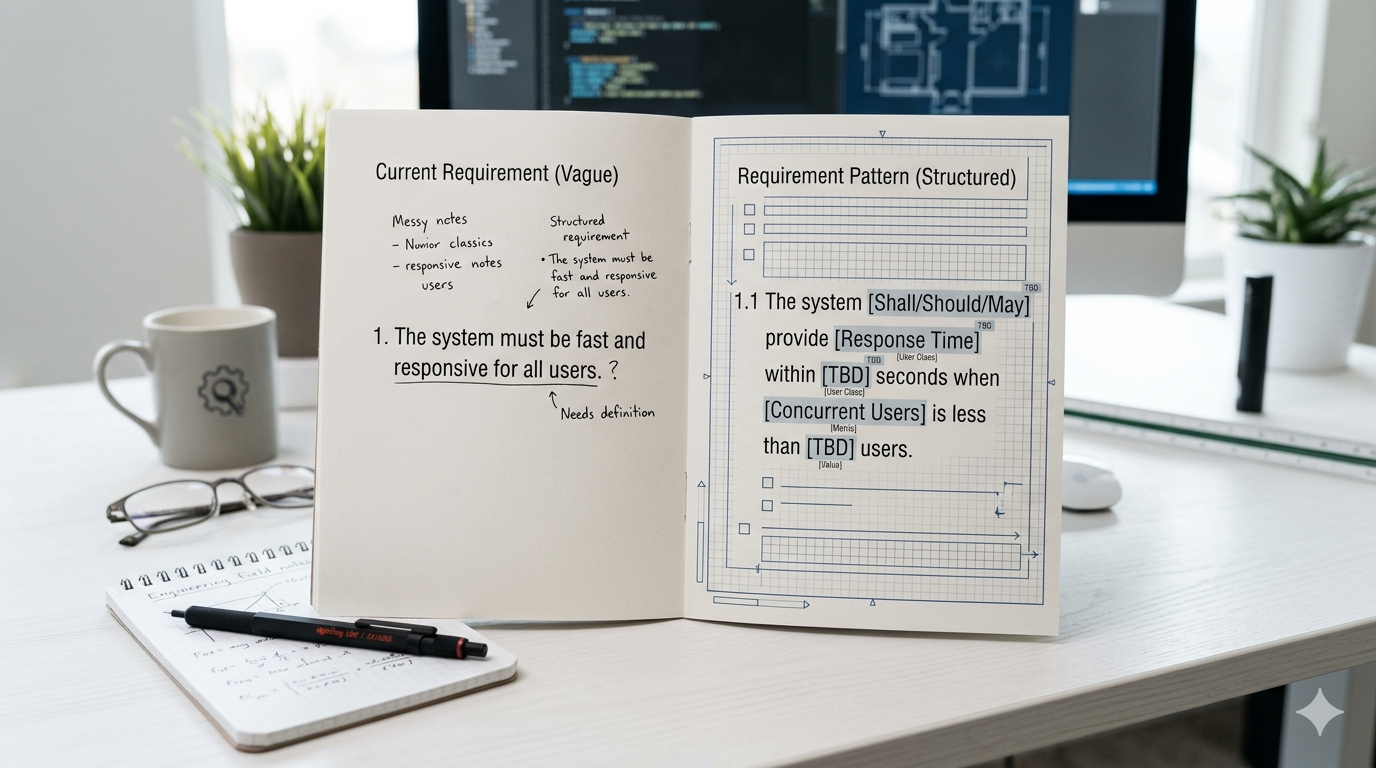
How Patterns and TBDs Make AI-Generated Requirements Better (Part 3/5)
MBSE depends on requirements that are clear, consistent, and verifiable, but stakeholder input is often vague. This post introduces a prototype that checks requirements against writing rules, generates transparent violation reports, rewrites for compliance, and exports structured outputs for SysML v2 workflows.
LLMs are powerful, but they are not the best tool for every requirement check. This post explains how a hybrid pipeline using code, spaCy, and LLMs can improve transparency, reduce cost, and make rule checking more engineering-oriented.

Use the LLM Where It Matters, Not for Everything: A Hybrid Workflow for Rule Checking (Part 2/5)
MBSE depends on requirements that are clear, consistent, and verifiable, but stakeholder input is often vague. This post introduces a prototype that checks requirements against writing rules, generates transparent violation reports, rewrites for compliance, and exports structured outputs for SysML v2 workflows.
Not every requirement-writing rule needs an LLM. This post shows a hybrid checking workflow that splits rule detection across programmatic checks, NLP, and LLM-based semantic analysis, so each method is used where it actually adds value.